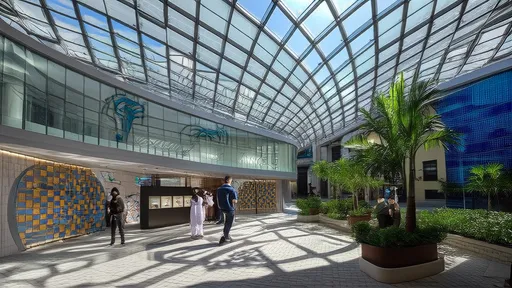
In a groundbreaking cultural synthesis that defies conventional categorization, the 2023 Nanjing International Art Fair has orchestrated an unprecedented dialogue between Hollywood's musical legacy and contemporary visual art. The event, held at the Nanjing International Expo Center, has transformed the traditional art exhibition model by weaving cinematic soundscapes into the fabric of contemporary artistic expression, creating a multisensory experience that challenges the very boundaries of artistic disciplines.
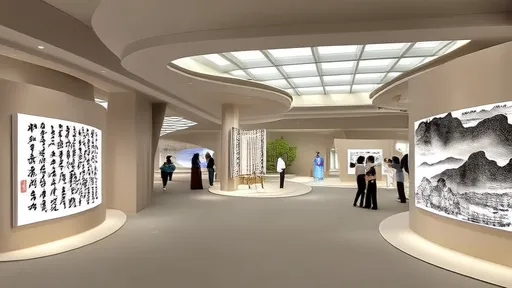
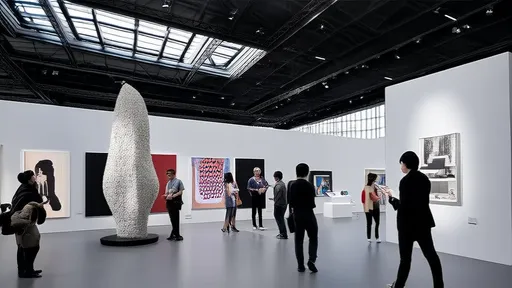
The central exhibition hall presents a stunning visual paradox: iconic Hollywood film scores emanate from strategically placed acoustic installations while visitors navigate through provocative contemporary artworks. What emerges is not merely background music for an art show, but a carefully choreographed conversation between auditory and visual narratives. The haunting melodies from Bernard Herrmann's Psycho score accompany a series of fragmented mirror installations, while the triumphant themes from John Williams' Star Wars underscore monumental sculptures exploring human aspiration.
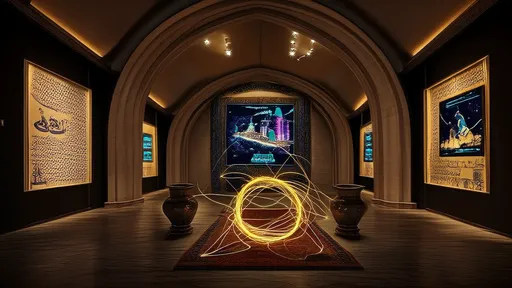
Curator Dr. Li Wei explains the conceptual framework behind this ambitious undertaking. "We're exploring the emotional architecture that connects cinematic music to visual art," he observes, standing before an immersive video installation synchronized with the swelling orchestration from Hans Zimmer's Inception. "Hollywood film scores operate on a subconscious level, guiding emotional responses much like visual art does. By merging these languages, we're creating a new dialect of sensory experience." The exhibition's most talked-about installation features the melancholic piano themes from Yann Tiersen's Amélie soundtrack interacting with a kinetic light sculpture that pulses in response to musical phrasing. Visitors find themselves caught in a delicate dance of light and sound, where the boundaries between listener and viewer blur into a unified aesthetic experience.
The installation has drawn unexpected emotional responses, with many attendees reporting a profound sense of nostalgia and connection that transcends traditional gallery encounters. Chinese contemporary artist Zhang Min has contributed a series of paintings created specifically in response to Ennio Morricone's spaghetti western scores. "The expansive, desert-like quality of Morricone's compositions inspired me to explore themes of isolation and vastness in urban landscapes," Zhang explains. Her massive canvases, depicting sprawling cityscapes empty of human presence, seem to echo the lonely trumpet calls characteristic of Morricone's most famous works, creating a poignant commentary on modern alienation. Meanwhile, American sound artist Michael Thompson has created a controversial installation using deconstructed elements from Danny Elfman's Batman theme. "I've taken the musical motifs associated with heroism and fractured them, much like contemporary society has fractured our understanding of heroism," Thompson explains.
His work features speakers placed at varying heights, each playing disjointed segments of the famous score, forcing visitors to physically move through the space to reconstruct the musical narrative. The educational component of the fair includes workshops where participants create visual art while listening to different film scores, documenting how the music influences their creative choices. Preliminary findings suggest that specific musical elements—minor keys, tempo changes, orchestral textures—consistently trigger particular color choices, brushstroke styles, and compositional decisions across diverse participants. This research provides fascinating insights into the cross-modal nature of artistic creation and perception. Critics have engaged in vigorous debate about the fair's approach. Traditionalists argue that the musical accompaniment risks overpowering the visual artworks, potentially reducing them to illustrations of the scores.
However, proponents counter that the synthesis creates a new artistic medium that transcends its individual components. "This isn't about art with background music," argues London-based art critic Sarah Jenkins. "It's about creating a holistic sensory environment where sound and vision become inseparable partners in emotional storytelling." The commercial aspect of the fair has revealed interesting market dynamics. Galleries report that artworks presented with their musical counterparts command significantly higher prices and attract a more diverse collector base, including film industry professionals and music executives who might not typically engage with contemporary art. This crossover appeal suggests untapped economic potential in interdisciplinary cultural programming. Technology plays a crucial role in the exhibition's execution. Sophisticated spatial audio systems ensure that musical experiences remain intimate and directional rather than becoming ambient noise.
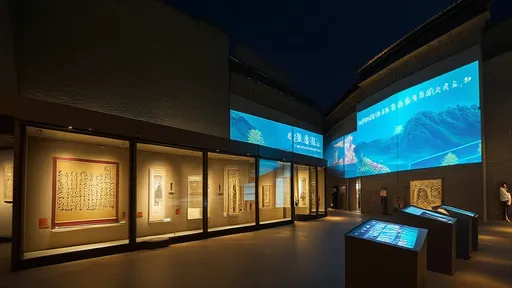
Visitors equipped with sensor-triggered headphones can move through zones where different scores fade in and out, creating personalized audio-visual journeys through the exhibition space. This technological framework allows for nuanced interactions between sound and artwork that would be impossible in traditional gallery settings. Beyond the main exhibition, the fair includes live performances where musicians reinterpret Hollywood scores in response to specific artworks, creating an evolving dialogue between performed music and static visual forms. These performances have become spontaneous social media sensations, with clips of jazz musicians improvising on Henry Mancini's Pink Panther theme in front of surrealist paintings going viral across multiple platforms.
The educational outreach program has partnered with local schools to bring students through the exhibition, using the familiar language of film music as an entry point to discuss contemporary art. Teachers report unprecedented engagement from students who typically express disinterest in traditional art education. "The music gives them an emotional anchor," explains Nanjing high school art teacher Chen Wei. "They begin by connecting to the familiar scores, then naturally develop curiosity about the artworks those scores are in conversation with." As the art world increasingly grapples with questions of accessibility and relevance, the Nanjing International Art Fair presents a compelling case for multisensory, cross-disciplinary approaches.
The success of this year's Hollywood soundtrack theme has already inspired plans for future editions exploring other musical genres—from classical compositions to electronic music—in dialogue with contemporary visual practices. The fair's impact extends beyond the duration of the event itself. Museum directors from Europe and North America have visited with interest, considering similar approaches for their own institutions. Meanwhile, academic conferences scheduled in conjunction with the fair have generated scholarly papers examining the neurological basis for the connections between musical and visual appreciation, contributing to the growing field of neuroaesthetics.
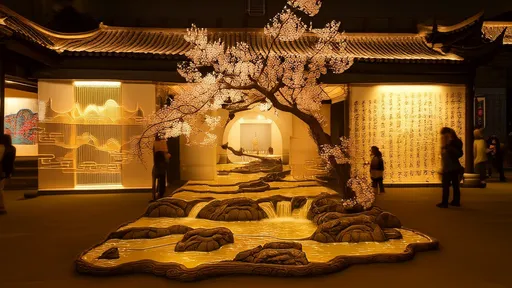
What emerges most powerfully from this innovative exhibition is the realization that artistic boundaries are largely artificial constructs. The emotional resonance of a John Williams melody and the visual impact of a contemporary sculpture tap into similar human capacities for meaning-making and emotional response. In bringing them together, the Nanjing International Art Fair hasn't just created an interesting exhibition—it has suggested new possibilities for how we might experience and create art in the 21st century. As visitors exit the final installation—a breathtaking combination of water, light, and the soaring themes from James Horner's Titanic score—they carry with them not just memories of individual artworks or musical pieces, but the lingering impression of a completely integrated aesthetic experience. In an age of increasing specialization and compartmentalization of artistic disciplines, the fair offers a powerful reminder of the fundamental unity of human creative expression across different media and traditions.
By /Oct 24, 2025
By /Oct 24, 2025
By /Oct 24, 2025
By /Oct 24, 2025
By /Oct 24, 2025
By /Oct 24, 2025
By /Oct 24, 2025
By /Oct 24, 2025
By /Oct 24, 2025
By /Oct 24, 2025
By /Oct 24, 2025
By /Oct 24, 2025
By /Oct 24, 2025
By /Oct 24, 2025
By /Oct 24, 2025
By /Oct 24, 2025
By /Oct 24, 2025

By /Oct 24, 2025
By /Oct 24, 2025
By /Oct 24, 2025