From Private Collection to Public Auction: Andy Warhol's 1964 Birmingham Race Riot" and Its Market Journey

Oct 24, 2025 By

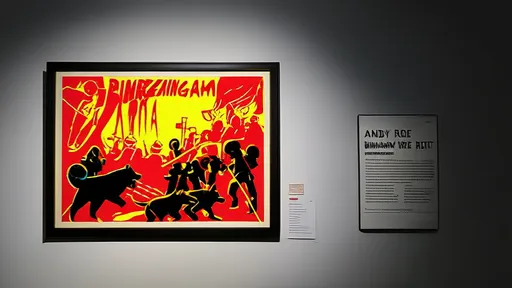
In the hushed halls of Sotheby's New York, a piece of American history hangs suspended between its troubled past and its commodified present. Andy Warhol's 1964 Birmingham Race Riot, a silkscreen print that captures one of the Civil Rights Movement's most harrowing chapters, is poised to transition from a private collection to the public spectacle of the auction block. This journey from personal artifact to high-stakes lot is more than a simple transaction; it is a narrative about memory, value, and the complex afterlife of images in a culture obsessed with both remembering and monetizing its traumas.


The artwork itself is a stark departure from Warhol's celebrated depictions of consumer goods and celebrity icons. Instead of Campbell's soup cans or Marilyn Monroe's smiling face, the print reproduces a photograph by Charles Moore, originally published in Life Magazine. The image is a chaotic tableau of the brutal police response to a peaceful protest in Birmingham, Alabama. In it, we see police officers with snarling dogs attacking Black demonstrators, the tension and violence frozen in the high-contrast black and white of Warhol's silkscreen process. He did not create the image, but he appropriated it, lifting it from the pages of mass media and transforming it into a work of art. This act of appropriation is central to the piece's power and its perpetual ambiguity.


For decades, this particular print resided in the hands of a private European collector, a ghost in the sprawling archive of Warhol's work. Its existence was known to scholars and art historians, but it was largely shielded from the public eye. In this private sanctuary, the work functioned as a secret, a piece of American racial violence held at a geographical and cultural remove. Its value was intrinsic, tied to the owner's personal connection to the piece and its historical significance, rather than a price tag determined by the volatile art market. This long period of seclusion adds a layer of mystique to its impending sale, framing it as an emergence, a rediscovery of a potent cultural relic.


The decision to bring the Birmingham Race Riot to auction signals a critical shift. The private collection is a closed system, a world of personal taste and discretion. The public auction, by contrast, is a theater of capitalism. It is a space where cultural value is explicitly and performatively translated into monetary worth. The gavel's fall will not merely signify a change of ownership; it will assign a new, public number to this difficult piece of history. This transition forces a confrontation between the artwork's solemn subject matter and the glittering, often superficial, world of high-stakes art collecting. Can the gravity of the Civil Rights struggle be adequately housed within this commercial framework? The auction house, of course, positions the sale as a celebration of Warhol's genius and the work's historical importance, but the subtext is a profound tension between remembrance and commodification.


Warhol's entire artistic project was preoccupied with the relationship between repetition, media, and desensitization. By reproducing the photograph of the Birmingham riot, he was asking uncomfortable questions about how society consumes images of suffering. When a photograph of violence becomes a print, and that print becomes an edition, and that edition becomes a collectible asset, what happens to the emotional and ethical weight of the original event? The market journey of this piece is the ultimate extension of Warhol's inquiry. The auction process itself—the cataloging, the pre-sale exhibitions, the bidding paddles rising in a crowded room—is a form of spectacle that mirrors the media spectacle from which the image was born. We are forced to watch ourselves watching history being sold.


Provenance, the history of an artwork's ownership, is a key driver of value in the art market. For a work like the Birmingham Race Riot, its provenance is uniquely charged. Its journey from Warhol's Factory to a private European collection and now to the global stage of a Sotheby's auction is a story that will be meticulously documented and marketed. This narrative becomes part of the artwork's aura, enhancing its allure and, consequently, its estimated price. The buyer, whether an institution like a museum or another private individual, will not just be purchasing a Warhol; they will be purchasing a chapter of this narrative, becoming the next custodian of an object that bridges art, journalism, and social history.


The sale also raises pressing questions about the role of cultural institutions. There is an implicit hope, or perhaps a public demand, that such a historically significant work should find a home in a museum. A museum would ostensibly de-commodify the piece, placing it in a context of education and public access rather than private enjoyment. It would allow the work to fulfill its potential as a tool for confronting a painful national past. However, the astronomical sums involved in acquiring a major Warhol often place such works beyond the reach of all but the most heavily endowed public institutions. The likely scenario is a fierce bidding war between ultra-wealthy private collectors, ensuring the work disappears behind closed doors once again, its market journey pausing before inevitably restarting in another decade or two.


Ultimately, the market journey of Andy Warhol's Birmingham Race Riot from private collection to public auction is a microcosm of a larger cultural dynamic. It highlights the uneasy but inextricable link between historical trauma and contemporary capital. The artwork, born from a moment of profound social upheaval, now exists as a luxury asset. Its power to shock, to sadden, and to provoke thought remains, but that power is now filtered through the prism of multi-million-dollar valuations and the rarefied air of the auction world. As the gavel prepares to fall, it does so on more than just a piece of art; it falls on the ongoing American struggle to reconcile its history with its marketplace, a struggle as relevant today as it was in 1964.


Recommend Posts
Arts

Guilin Art Festival Drama Section: Twenty Thousand Leagues Under the Sea" and "The Seagull" Surrounded by Mountains and Rivers

By /Oct 24, 2025

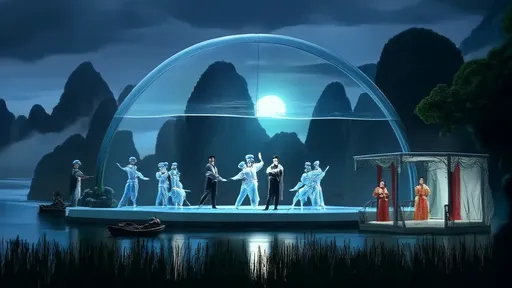
As the morning mist lifts from the karst peaks of Guilin, a new artistic dawn breaks over the Li River. The inaugural Guilin Art Festival has unveiled its theatrical program, presenting two extraordinary productions that merge world literature with China's most breathtaking natural scenery. In a bold curatorial move, the festival organizers have staged two seemingly disparate works—Jules Verne's visionary sci-fi adventure 20,000 Leagues Under the Sea and Anton Chekhov's timeless masterpiece The Seagull—within the same natural amphitheaters, creating what critics are already calling "the most innovative theatrical experience in recent memory."
Arts

Guarding the Journey, Dialogue with the Future: A Review of the 70th Anniversary of Sino-Russian Diplomatic Relations Oil Painting Exhibition Curated by Zheng Guangxu"

By /Oct 24, 2025

In the heart of Beijing's cultural district, an extraordinary exhibition unfolded that would bridge decades of diplomatic history through the universal language of art. "Guardians of the Journey: Dialogues with the Future," curated by the distinguished Chinese artist Zheng Guangxu, commemorated the 70th anniversary of Sino-Russian diplomatic relations with a breathtaking collection of oil paintings that spoke volumes about the enduring connection between these two great nations.
Arts

The Jinan Chapter at the Macau International Art Biennale: The Charm of Yellow River Culture and Spring City"

By /Oct 24, 2025

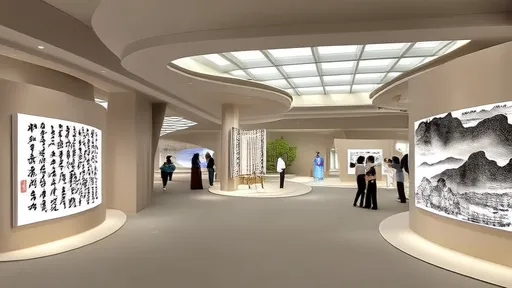
Under the golden chandeliers of the Macao Museum of Art, a quiet revolution is taking place in the way Chinese regional culture is presented on the international stage. The Macao International Art Biennale 2023 has dedicated an entire pavilion to Jinan, a city historically overshadowed by its more famous neighbors like Beijing and Shanghai. This is not merely a regional showcase; it is a profound statement about the evolving narrative of Chinese cultural identity.
Arts

Great Rivers Surge: Jinan Pavilion Debuts at the Macau International Art Biennale"

By /Oct 24, 2025

Golden autumn winds carry whispers of artistic revolution across the Pearl River Delta as Jinan makes its grand debut at the Macao International Art Biennale. The exhibition, titled The Roaring River: Jinan's Cultural Renaissance, has become the talk of the town, drawing critics, collectors, and art enthusiasts into its swirling currents of innovation and tradition.
Arts

Boundless Dramatic Dialogue in the Context of Guilin Landscape: A Special Interpretation of the Play The Seagull"

By /Oct 24, 2025

In an unprecedented fusion of theatrical tradition and natural grandeur, Chekhov's timeless masterpiece The Seagull recently unfolded against the ethereal backdrop of Guilin's karst landscape, redefining the very essence of environmental performance art. This groundbreaking production transformed the conventional theater space into a living, breathing stage where limestone peaks stood as silent actors and the Li River whispered Chekhov's subtext through rustling reeds.
Arts

Contemporary Expressions of Geo-cultural Identity: The Central Prism of Nanjing Art Fair and the Nanjing Model

By /Oct 24, 2025

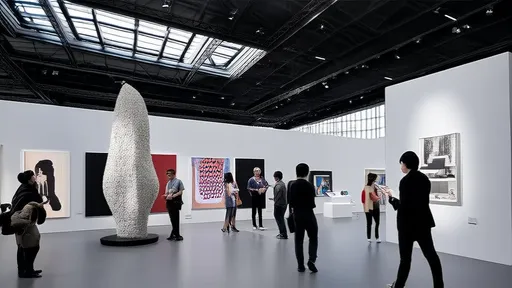
In the heart of China's Yangtze River Delta, where ancient stone walls whisper tales of dynasties past, a contemporary cultural narrative is being rewritten. The Nanjing International Art Fair has emerged not merely as another exhibition venue but as a geographical and cultural prism refracting China's complex artistic identity through a distinctly regional lens. This annual gathering of artists, collectors, and curators has transformed from a provincial showcase into what scholars are calling a "central prism" for understanding how Chinese art negotiates its position between global influences and deeply rooted local traditions.
Arts

From Shelf Paintings to Digital Art: The Diversification of Artwork Types in the Silk Road Art Exhibition

By /Oct 24, 2025

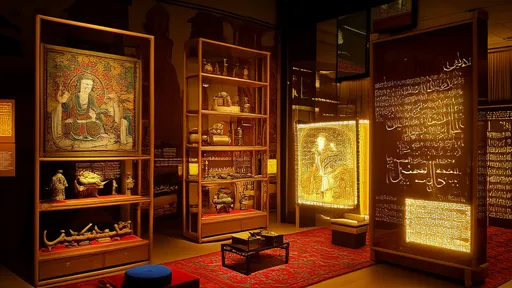
Walking through the grand halls of the National Art Museum, one witnesses a remarkable transformation unfolding across the exhibition spaces dedicated to the Silk Road. The air hums with both the silent dignity of centuries-old canvas and the electric pulse of digital innovation, creating a sensory dialogue between tradition and technology that defines our contemporary moment.
Arts

Hollywood Golden Tunes and Contemporary Art on Stage: Nanjing Art Expo's Attempt at Diverse Integration

By /Oct 24, 2025

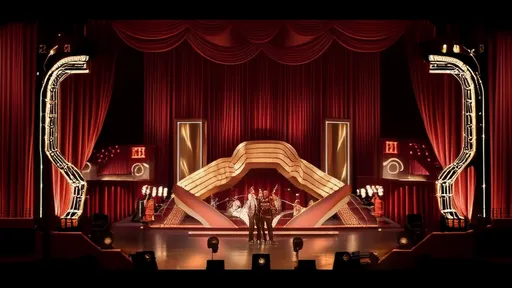
In a groundbreaking cultural synthesis that defies conventional categorization, the 2023 Nanjing International Art Fair has orchestrated an unprecedented dialogue between Hollywood's musical legacy and contemporary visual art. The event, held at the Nanjing International Expo Center, has transformed the traditional art exhibition model by weaving cinematic soundscapes into the fabric of contemporary artistic expression, creating a multisensory experience that challenges the very boundaries of artistic disciplines.
Arts

Transcending Co-construction: 2025 ART Nanjing Contemporary Art Expo Opens"

By /Oct 24, 2025

As the morning mist lifts from the ancient city walls of Nanjing, a different kind of dawn breaks over the contemporary art world. The year 2025 marks not merely another edition but a fundamental reimagining of what an art fair can be, as ART Nanjing Contemporary Art Fair unveils its most ambitious project to date: Beyond Co-construction. This isn't just a theme; it's a manifesto, a call to arms for artists, galleries, collectors, and viewers to step out of established frameworks and co-create the very future of artistic expression.
Arts

Breaking Directions in Silk Road Art Exhibitions: A Traditional Dialogue with the Future"

By /Oct 24, 2025

Against the backdrop of global cultural exchanges, the Silk Road Art Exhibition stands as a testament to the enduring legacy of ancient civilizations and their dialogue with contemporary artistic expressions. This exhibition not only showcases historical artifacts but also bridges the gap between tradition and modernity, creating a unique platform where the past converses with the future. The curatorial vision behind this event is to transcend mere display, aiming instead to foster a dynamic interaction between diverse cultural heritages and innovative artistic practices.
Arts

Urban Pavilion Project: Macau Biennale Promotes In-Depth Cultural Integration between Ji and Ao"

By /Oct 24, 2025

The Macau Biennale has unveiled its most ambitious urban pavilion project to date, a sprawling cultural initiative that promises to redefine the artistic dialogue between Macau and its neighboring regions. Curated under the theme "Converging Currents," this year's exhibition transcends traditional gallery boundaries by integrating site-specific installations throughout the city's urban fabric. The project represents a significant departure from previous iterations, moving beyond mere cultural exchange to establish what organizers describe as "a living laboratory for cross-border creative collaboration."
Arts

Combining Offline and Online: The Dual Exhibition Approach of the Silk Road Art Exhibition"

By /Oct 24, 2025

In the heart of Xi'an, where ancient city walls stand as silent witnesses to centuries of cultural exchange, a groundbreaking exhibition is redefining how we experience art. The Silk Road Art Exhibition, a ambitious cultural project spanning six months, has masterfully woven together physical and digital realms to create an immersive journey through one of history's most significant trade routes. Unlike traditional exhibitions that force visitors to choose between physical presence and virtual convenience, this pioneering approach celebrates both, creating a symbiotic relationship between tangible artifacts and digital enhancements that transforms the way we understand and appreciate cultural heritage.
Arts

From Xuan Paper to the Screen: Materiality and Cultural Symbolism of Paper-based Art in the Digital Age

By /Oct 24, 2025

In the hushed halls of the National Gallery, a visitor stands not before a canvas, but before a high-resolution screen. A magnified detail of a Song Dynasty landscape scroll glides silently under their fingertips, revealing brushstrokes and paper textures invisible to the naked eye. This quiet moment encapsulates a profound cultural shift: the migration of paper-based art from its traditional, tangible realm into the luminous, fluid domain of the digital. The journey from paper to screen is not merely a change of medium; it is a complex negotiation of materiality, authenticity, and cultural symbolism that is redefining our relationship with art itself.
Arts

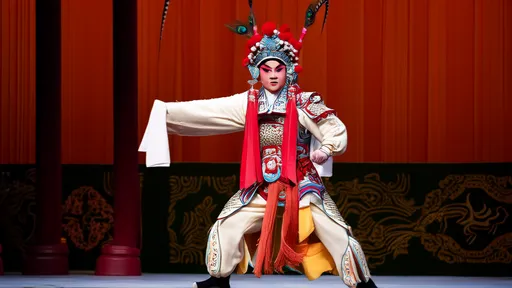
Beijing Opera 'Xi Wu': When Traditional Beijing Opera Meets Modern Drug Enforcement Storm

By /Oct 24, 2025

In the heart of Beijing's bustling theater district, a groundbreaking performance is challenging the very definition of Chinese opera. Jing Opera "Xiwu" has emerged as a cultural phenomenon, masterfully weaving traditional Peking opera artistry with the gritty realism of modern anti-drug enforcement. This innovative production represents more than just entertainment—it's a bold statement about cultural preservation and contemporary relevance.
Arts

Echoes of a Millennium: A Cross-Cultural Dialogue of Contemporary Chinese Paper Art in The Hague, Netherlands"

By /Oct 24, 2025

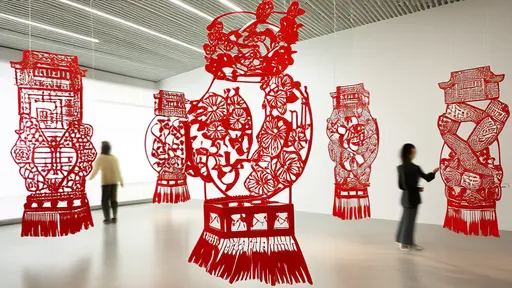
In the heart of The Hague, where Vermeer's light once danced across canvas, a new artistic dialogue is unfolding—one that bridges centuries and continents through the humble yet profound medium of paper. Paper Language Through Millennia: Cross-Cultural Dialogue of Contemporary Chinese Paper Art in The Hague represents more than an exhibition; it is a conversation between civilizations, where ancient Chinese paper-making traditions meet contemporary artistic practices in a European cultural capital.
Arts

Raymond Wang Hollywood Film Hits Concert: The Cross-Border Sound of Nanjing Art Expo"

By /Oct 24, 2025

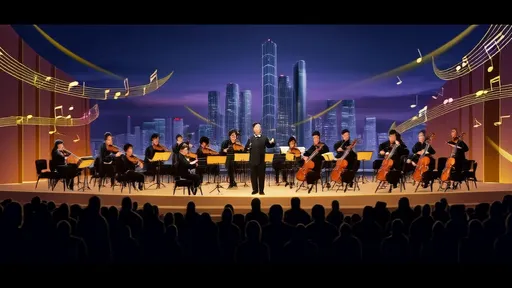
Under the vaulted ceilings of Nanjing International Art Fair, an unusual fusion of artistic worlds unfolded as Wang Zongxian, the celebrated Chinese pianist, led audiences through a cinematic journey across Hollywood's most iconic film scores. The air crackled with anticipation long before the first notes of John Williams' Star Wars theme reverberated through the exhibition hall, marking a groundbreaking moment where visual art met symphonic storytelling.
Arts

From Private Collection to Public Auction: Andy Warhol's 1964 Birmingham Race Riot" and Its Market Journey

By /Oct 24, 2025

In the hushed halls of Sotheby's New York, a piece of American history hangs suspended between its troubled past and its commodified present. Andy Warhol's 1964 Birmingham Race Riot, a silkscreen print that captures one of the Civil Rights Movement's most harrowing chapters, is poised to transition from a private collection to the public spectacle of the auction block. This journey from personal artifact to high-stakes lot is more than a simple transaction; it is a narrative about memory, value, and the complex afterlife of images in a culture obsessed with both remembering and monetizing its traumas.
Arts

Breaking Boundaries and Integrating Innovation: Guilin Art Festival Interprets the Theme of Transformation"

By /Oct 24, 2025

Under the twilight glow of the Guilin mountains, the opening ceremony of the Guilin Arts Festival unfolded like a living landscape painting, blurring the boundaries between art and nature. The concept of Breaking Boundaries and Integrating Innovation permeated every aspect of the festival, transforming the ancient city into a vibrant canvas of contemporary artistic expression. Against the backdrop of karst peaks and winding rivers, artists from across the globe gathered to explore the theme of Transcendent Realms, creating a cultural phenomenon that resonated deeply with audiences and critics alike.
Arts

Pioneer Art Awards and Expert Art Committee: How Does Nanjing Art Expo Select Artists of the Year?"

By /Oct 24, 2025

The Nanjing Art Fair has once again captured the attention of the international art community with its prestigious Pioneer Art Awards, a ceremony that not only celebrates artistic excellence but also reveals the intricate mechanics of contemporary art valuation. Behind the velvet ropes and champagne toasts lies a rigorous selection process orchestrated by the Specialized Art Committee, whose collective expertise determines which artists will define the year's cultural narrative.
Arts

54.64 Meter Ink Wash Scroll 'The Great River Gallops' Becomes the Spotlight at the Macao Biennale"

By /Oct 24, 2025

Against the backdrop of Macau's glittering skyline, a monumental work of Chinese ink art has become the undisputed centerpiece of the 2023 Macau Biennial, commanding attention from collectors, critics, and art enthusiasts alike. The 54.64-meter continuous scroll titled "The Great River Roars" represents not merely an artistic achievement but a profound cultural statement that bridges ancient tradition with contemporary vision.