Golden autumn winds carry whispers of artistic revolution across the Pearl River Delta as Jinan makes its grand debut at the Macao International Art Biennale. The exhibition, titled The Roaring River: Jinan's Cultural Renaissance, has become the talk of the town, drawing critics, collectors, and art enthusiasts into its swirling currents of innovation and tradition.
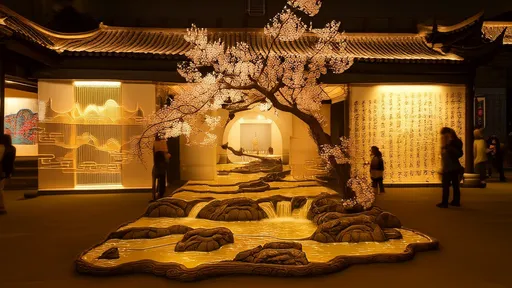
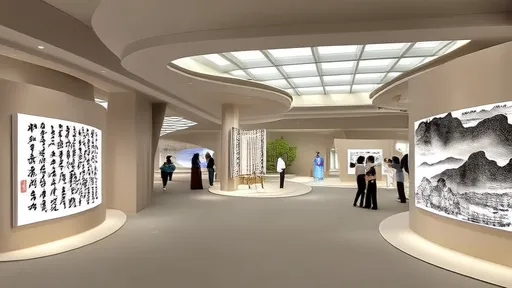
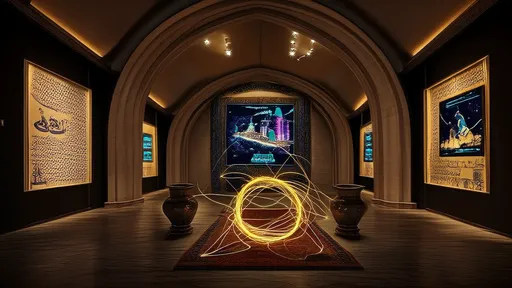
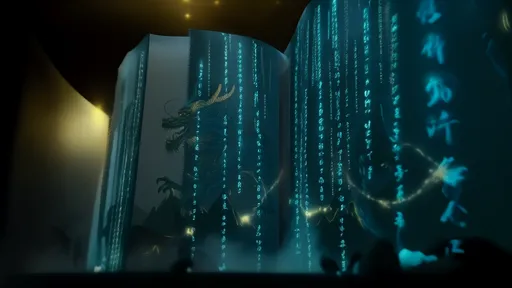
Walking into the pavilion feels like stepping into a dreamscape where ancient Shandong dialect echoes through hyper-modern installations. The air hums with the silent poetry of brushstrokes meeting digital projections, of clay sculptures breathing alongside augmented reality. Curator Dr. Liang Wei, whose silver hair seems to capture the very light she plays with in her installations, moves through the space like a conductor orchestrating visual symphonies. This isn't just an exhibition, she tells me, her eyes reflecting the dancing light from a holographic calligraphy piece, it's a conversation across centuries.
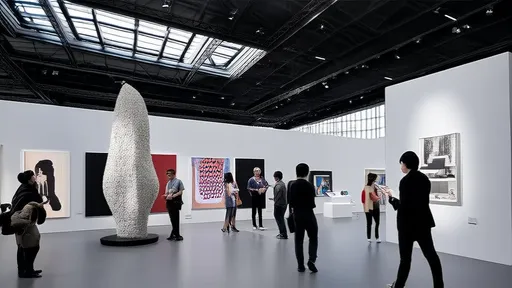
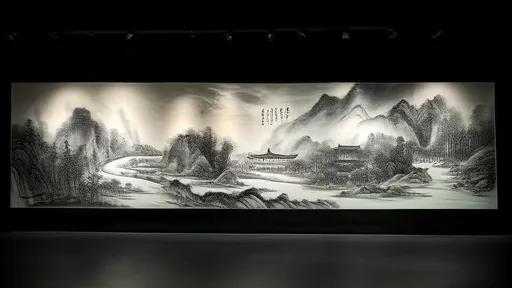
The centerpiece, Yellow River Memory No. 7, dominates the main hall with its terrifying beauty. Artist Chen Xiaowei spent eighteen months collecting soil samples from 47 locations along the Yellow River basin, processing them into pigments that seem to pulse with geological memory. The massive triptych doesn't just depict the river—it contains the river, with mineral textures that change under different lighting conditions. During my visit, an elderly Macao resident reached out as if to touch the painting's surface, her fingers stopping millimeters from the canvas. I can smell the loess plateau, she whispered, her voice thick with emotion.
Meanwhile, in the digital corridor, Zhang Lei's Floating Springs installation has visitors lining up for hours. Using motion sensors and real-time rendering, the piece transforms human movement into digital water patterns that ripple across seven massive screens. The effect is mesmerizing—walk through the space and you become part of an ever-changing digital Baotu Spring. I've never seen technology feel so organic, remarked Portuguese architect Eduardo Silva, who has visited three times already. It's like the artist coded liquid poetry.
The traditional crafts section provides what many describe as the exhibition's emotional anchor. Here, 78-year-old master porcelain artist Wang Deliang demonstrates the nearly lost art of Luban porcelain, his gnarled hands moving with impossible precision. Each piece takes three months to complete, involving seventeen layers of glazing and firing at temperatures that must be maintained within five degrees of perfection. Watching him work feels like witnessing a sacred ritual. Young people tell me this is too slow, he says without looking up from his wheel, but some beauties cannot be rushed.
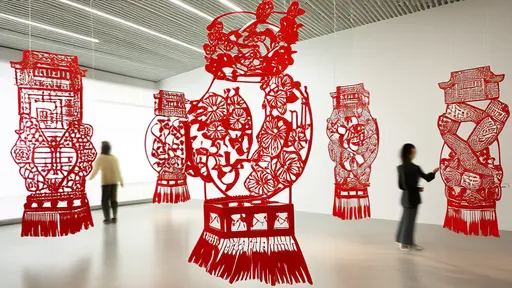
Perhaps the most controversial piece comes from the youngest exhibitor, 24-year-old Lin Yue. Her AI-Generated Folk Tales project trains machine learning algorithms on Shandong folklore, then creates new stories that blur the line between human and artificial creativity. The resulting animations, projected onto traditional paper-cut silhouettes, have divided critics. This is either genius or heresy, declared art historian Professor Marcus Tan from the University of Macau, but it's certainly not boring.
The educational programs running alongside the exhibition have become unexpectedly popular. Daily workshops on Shandong embroidery regularly fill within hours of announcement, while the lecture series on Neo-Confucianism in Contemporary Art has standing room only. What's particularly interesting is the demographic—over sixty percent of attendees are under thirty-five, suggesting a growing hunger for cultural depth among younger generations.
Behind the scenes, the logistics of bringing Jinan's art to Macao read like an epic poem. Special climate-controlled containers had to be built for the ancient textiles, while the digital works required a team of twelve technicians working in shifts. Exhibition director Michael Zhou hasn't slept more than four hours a night for two months. We're not just moving art, he tells me during a rare quiet moment, we're transporting cultural DNA.
The economic impact extends beyond the gallery walls. Local Macao restaurants report a thirty percent increase in business, with many creating special Jinan-inspired menus. Hotel bookings along the exhibition route have seen similar spikes, while traditional craft shops note renewed interest in Chinese cultural products. This exhibition has reminded people that culture is living, breathing commerce, observes tourism analyst Maria Fernandes.
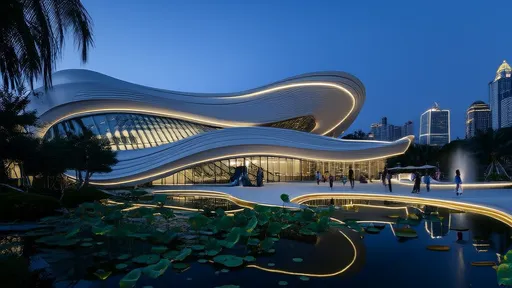
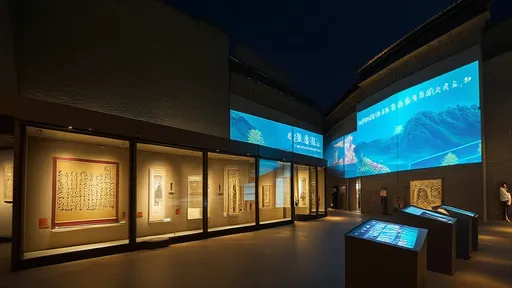
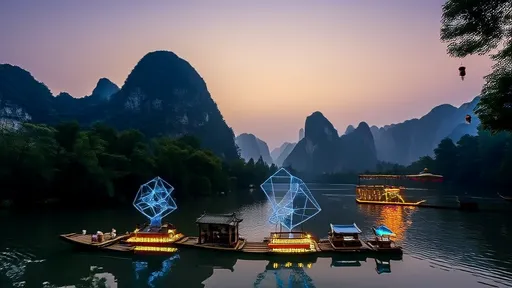
As night falls over Macao, the Jinan pavilion takes on a different character. The external facade, made of thousands of programmable LED tiles, transforms into a flowing river of light, visible from across the harbor. Crowds gather on the waterfront to watch the daily light show, where digital cranes (echoing Jinan's symbol) dance across the building's surface. It's become something of a ritual—the sunset, then the light show, then the slow stream of people moving inside to discover what magic waits within.
What becomes clear after multiple visits is that this exhibition represents something larger than itself. In an age of increasing globalization, The Roaring River demonstrates how regional identities can assert themselves without retreating into isolationism. The artists aren't rejecting global influences—they're digesting them, combining them with deep local traditions to create something entirely new. As Dr. Liang puts it during our final conversation: We're not preserving culture in amber. We're planting ancient seeds in new soil and watching what strange, beautiful flowers might grow.
The exhibition continues through January, but its influence seems certain to ripple far beyond its closing date. Already, museums in Paris and New York have expressed interest in hosting variations of the show. Meanwhile, back in Jinan, applications to art schools have increased by forty percent since the exhibition opened. The river, it seems, is just beginning to roar.
By /Oct 24, 2025
By /Oct 24, 2025
By /Oct 24, 2025
By /Oct 24, 2025
By /Oct 24, 2025
By /Oct 24, 2025
By /Oct 24, 2025
By /Oct 24, 2025
By /Oct 24, 2025
By /Oct 24, 2025
By /Oct 24, 2025
By /Oct 24, 2025
By /Oct 24, 2025
By /Oct 24, 2025
By /Oct 24, 2025
By /Oct 24, 2025
By /Oct 24, 2025
By /Oct 24, 2025
By /Oct 24, 2025
By /Oct 24, 2025