In the hushed halls of fashion history, certain garments transcend their material form to become cultural touchstones. The Max Mara 101801 coat is one such artifact. More than a mere piece of outerwear, it is a sartorial thesis on the nuanced dialogue between masculine tailoring and feminine elegance. Conceived in 1981 by the visionary designer Anne-Marie Beretta, the 101801 was not merely designed; it was engineered. Its genius lies not in flamboyant detail or fleeting trend, but in a profound understanding of silhouette, proportion, and the quiet power of androgyny. It stands as a monument to the idea that true style is not about adornment, but about architecture for the body.
The origin story of the 101801 is steeped in a radical proposition for its era: to reimagine the quintessential men’s overcoat for the modern woman. At a time when power dressing often meant sharp, constricting shoulders and overtly structured forms, Max Mara looked to the timeless classics of the male wardrobe. The inspiration was drawn from the robust, utilitarian lines of the military greatcoat and the relaxed, confident drape of a professor’s camel-hair coat. These were garments built for purpose, for movement, for a life lived without sartorial apology. Beretta’s mission was to capture this inherent authority and freedom, then translate it through a lens of unmistakable femininity. The goal was not to dress a woman as a man, but to clothe her in the same unassailable confidence.
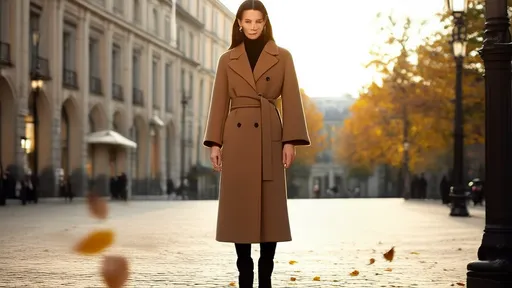
The alchemy of the 101801’s design is where this vision finds its perfect expression. At first glance, its components are deceptively simple: a kimono-style cut, raglan sleeves, a sweeping double-breasted front, and a formidable turn-back cuff. Yet, each element is meticulously calibrated to achieve its unique effect. The kimono cut, originating from the shoulders, creates a fluid, unstructured envelope around the body. It avoids the rigid armholes of traditional tailoring, granting the wearer an unparalleled freedom of movement. This initial boxy silhouette is then masterfully contoured by the raglan sleeves. These sleeves, cut in one piece with the body of the coat, slope gently downward, creating a dynamic line that narrows the shoulders and draws the eye vertically. It is this combination—the expansive body and the sleek, sloping sleeves—that creates the coat’s iconic, almost paradoxical, silhouette: simultaneously voluminous and streamlined.
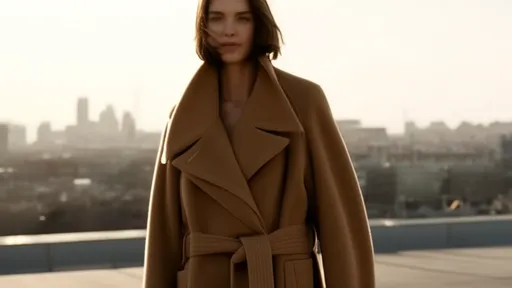
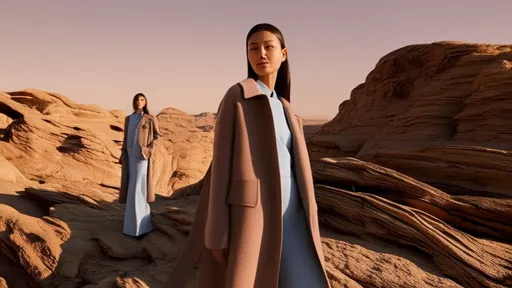
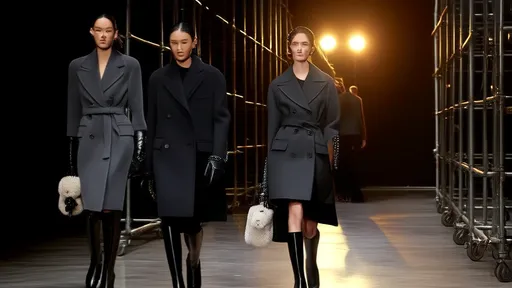
Further defying the conventions of its masculine inspirations, the coat’s femininity is carved out through subtle, intelligent details. The waist is never cinched or belted in the traditional sense; instead, the cut itself creates a natural, flattering line. The generous length, typically falling mid-calf, lends a statuesque grace, its weight and swing communicating a sense of substance and poise with every step. The oversized turn-back cuffs are not merely decorative; they are functional, pragmatic elements that can be folded up for a different proportion, allowing the wearer to personalize the garment’s character. And then there is the collar—a wide, dramatic shawl collar that frames the face like a portrait. When turned up against the wind, it offers both protection and an air of enigmatic glamour, a private fortress of style.
The fabric is the soul of the 101801, and its selection was as deliberate as its cut. The coat is crafted from a luxurious blend of cashmere and virgin wool, a combination that achieves a perfect equilibrium. It provides the warmth and durability required of a serious winter coat, yet possesses a softness and a drape that are inherently sensual. The signature camel hue was chosen for its chameleonic qualities. It is a neutral, yet it is warm. It is classic, yet it possesses a rich, almost golden depth that flatters a vast spectrum of skin tones. It does not shout; it whispers with an understated authority that aligns perfectly with the coat’s overall ethos. This commitment to material excellence ensures that the 101801 does not simply clothe the body, but embraces it, improving with age and developing a unique patina that tells the story of its wearer.
Perhaps the most compelling aspect of the Max Mara 101801 is its profound universality. It is a garment that refuses to be categorized by age, body type, or even strict definitions of style. On a young professional, it projects an aura of earned sophistication. On an artist, it reads as a uniform of intellectual rigor. On a woman of a certain age, it becomes a symbol of timeless, uncompromising elegance. It is as comfortable paired with jeans and sneakers as it is draped over an evening gown. This chameleonic quality is not an accident but the very purpose of its design. It provides a canvas upon which the wearer’s own identity can be projected. The coat does not wear the woman; the woman wears the coat, imbuing it with her own character and narrative.
In the decades since its creation, the 101801 has ascended to the status of a cultural icon, a staple in the wardrobes of style luminaries and everyday women alike. Its production has never ceased, a testament to its enduring appeal. It is passed down through generations, not as a relic, but as a relevant and powerful garment. In a fashion landscape perpetually obsessed with the new, the 101801 stands as a quiet rebuke. It champions the values of investment dressing, of slow fashion, of pieces that are bought not for a season, but for a lifetime. It represents an antidote to the disposable nature of modern consumerism, asserting that the most modern statement one can make is a commitment to enduring quality and design.
Ultimately, the story of the Max Mara 101801 is a masterclass in the power of subtlety. It demonstrates that femininity does not have to be fragile or overtly decorative. It can be found in the strength of a shoulder line, the freedom of a cut, the swing of a hem. It redefined power dressing away from aggressive imitation and toward a more nuanced, self-possessed ideal. The coat is a sartorial declaration that a woman can command a room not by adopting a masculine uniform, but by embracing a hybrid elegance that is entirely, powerfully her own. It is, and will likely remain, the ultimate synthesis of masculine inspiration and feminine spirit—a timeless shell for the modern woman, forever relevant, forever elegant.
By /Oct 22, 2025
By /Oct 22, 2025
By /Oct 22, 2025
By /Oct 22, 2025
By /Oct 22, 2025
By /Oct 22, 2025
By /Oct 22, 2025
By /Oct 22, 2025
By /Oct 22, 2025
By /Oct 22, 2025
By /Oct 22, 2025
By /Oct 22, 2025
By /Oct 22, 2025
By /Oct 22, 2025
By /Oct 22, 2025
By /Oct 22, 2025
By /Oct 22, 2025
By /Oct 22, 2025
By /Oct 22, 2025

By /Oct 22, 2025